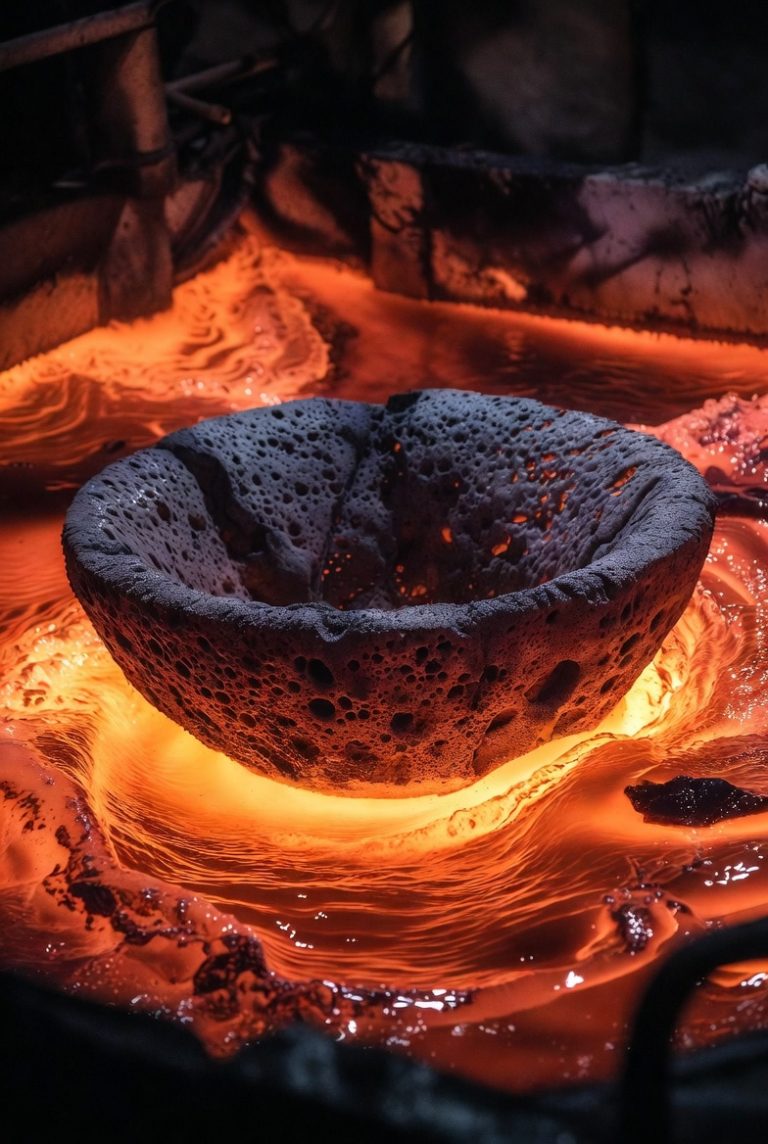
Rusty Sponge Bowl Iron Tank
Pleased so pleased oh nice to meet you. The Furnace Chamber had been sealed for decades, but the night auditor’s keycard still worked on the old service elevator. Marcus didn’t ask why. He was only twenty-four, new to Vanguard Steel, and desperate to prove he could handle the graveyard shift. The pay was good. The rumors about the building’s original foundry level were just office ghost stories—something to laugh about over lukewarm coffee.
Until tonight.
The elevator doors opened onto a corridor that smelled of rust and scorched air. A faint orange glow pulsed at the far end, like a dying heartbeat. Marcus followed it past rusted pipes and warning signs that had faded to illegible smears. The door to the old smelting room hung open an inch, as though someone had been expecting him.
Inside, the tank waited.
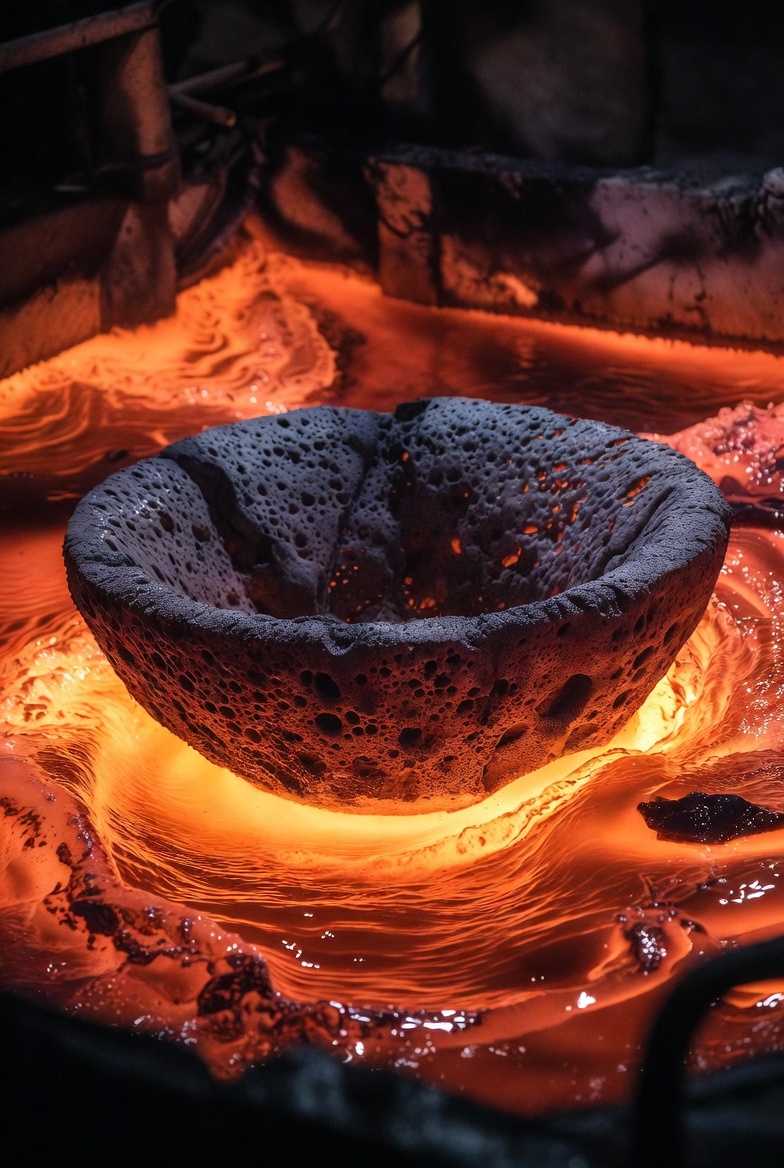
It was exactly as the picture he’d glimpsed on a forgotten security feed: a wide vat of molten iron, bright orange and churning slowly, thick as blood. And floating dead-center on its surface was the bowl.
It looked like a sponge someone had carved into a perfect vessel—black, porous, riddled with thousands of tiny holes that opened and closed like gills. Its edges were ragged, its interior deep and shadowed. The iron lapped at it but never swallowed it, never burned it. The bowl simply bobbed, breathing.
Marcus’s flashlight beam trembled across its surface. A single drop of molten iron slid down the bowl’s outer curve and hissed away into steam. He should have run. Instead he stepped closer, drawn by the low, wet sound coming from inside the thing—like someone typing on an old mechanical keyboard, very fast, very far away.
A voice drifted up from the holes. Female. Crisp. Professional.
“Entry logged. Subject: Marcus Hale. Time: 02:17 a.m. He’s looking right at me.”
Marcus jerked back. The voice was coming from the bowl. Not through speakers—from the sponge itself, each pore vibrating like a tiny speaker.
He knew the voice. Every employee had heard the old training tapes on their first day. Eleanor Hargrove. The Ghost Secretary. Personal assistant to the founder in the 1980s. Died in the elevator shaft in ’89. The company line was “tragic accident.” The night janitors said she never left.
Marcus’s phone buzzed in his pocket—an internal alert he hadn’t triggered. The screen lit up with a live feed. Not of the room. Of himself, standing right here, staring into the bowl. The camera angle was from inside the sponge, looking up through one of its holes like a hidden lens.
The typing sound quickened.
“Subject has discovered the archive. Probability of exposure: 87%. Recommend immediate containment.”
The molten iron rippled. Eleanor’s face formed on its surface—not a reflection, but a living image. She wore the same pearl necklace and severe bun from the company portraits, but her eyes were empty sockets filled with the same orange glow as the tank. She smiled the polite, terrifying smile of someone who has read every email you’ve ever sent.
“Hello, Marcus,” she whispered, and the bowl’s pores flared wider. “I’ve been keeping you under cover for weeks. The deleted spreadsheets. The late-night calls to the whistleblower hotline. The little video you took of the CEO’s safe. All filed. All timestamped.”
Marcus tried to back away. His shoes stuck to the floor as if the iron had seeped up through the concrete. The bowl drifted closer to the edge of the tank, drawn by his fear.
“I was the perfect secretary,” Eleanor continued, her voice now inside his skull, smooth and cold. “I knew where every skeleton was buried because I helped bury them. When they pushed me down that shaft, I fell… but I landed here. In the iron. In the bowl. Now I watch everyone. Every keystroke. Every lie told with the lights off. Every secret whispered under the cover of ‘team building.’”
A tendril of molten iron rose from the tank and wrapped around the bowl’s rim like a finger. The sponge drank it in; the holes glowed brighter.
“You’re next on my list,” she said sweetly. “But don’t worry. I’m very discreet. No one will ever know you’re gone. I’ll file the report myself—‘resigned for personal reasons.’ Just like the last three auditors.”
Marcus lunged for the door. It slammed shut on its own. The lights died. The only illumination came from the tank, painting the walls in hellish orange.
From behind him, the typing resumed—faster now, frantic, delighted.
“New entry,” Eleanor’s voice sang through every pore of the sponge. “Subject secured. Transferring consciousness… initializing permanent under-cover assignment.”
The bowl tilted toward him. Its hundreds of holes opened at once, revealing tiny, perfect reflections of Marcus’s own terrified face staring back from each one.
He screamed, but the sound was already being absorbed, catalogued, filed away forever.
In the morning, the day shift would find the Furnace Chamber door locked again. The night auditor’s keycard would be on the CEO’s desk with a neatly typed note:
Resigned. Personal reasons. —E.H.
And somewhere far below, in the orange glow, the sponge bowl would bob gently on its sea of liquid iron, waiting for the next late-night worker to wander too close.
Waiting to add one more secret to the archive.